Key Takeaway
Chrono built two real-time generative AI experiences for a global media company, a live story that generates video as viewers direct the plot and a voice conversation with a well-known animated character, using Google Veo, Gemini and Whisper orchestrated through n8n.
Fans don’t just want to watch characters anymore. They want to talk to them and change what happens next. A global media company wanted to find out what that could look like with generative AI. Chrono built two working experiences: a live story that generates video in real time as viewers steer the plot, and a voice conversation with one of the company’s best-known animated characters. Both ran live. If you own characters or stories and want to test what AI can do with them, this is a fast way to find out.
What did the media company want to learn?
Whether generative AI could create new ways for fans to interact with its characters and stories. Not a slide deck about the possibilities. Working experiences fans could actually try.
That’s a different brief from building a product. The goal was to learn fast, so the experiences had to be real enough to judge and quick enough to build that the answer arrived while it still mattered.
What did Chrono build?
Two experiences:
A live, viewer-directed story. Viewers choose where the plot goes, and the next scene is generated as video in real time.
A voice conversation with a character. Fans speak out loud and a well-known animated character answers back in real time.
How does real-time generative video and voice work?
By chaining specialized models, each doing one job. Whisper turns the fan’s speech into text. Gemini handles the language: understanding the request and writing what the character says or what happens next in the story. Google Veo generates the video.
n8n workflows orchestrate the models, with Redis alongside to keep each session fast. The front end is a Next.js app.
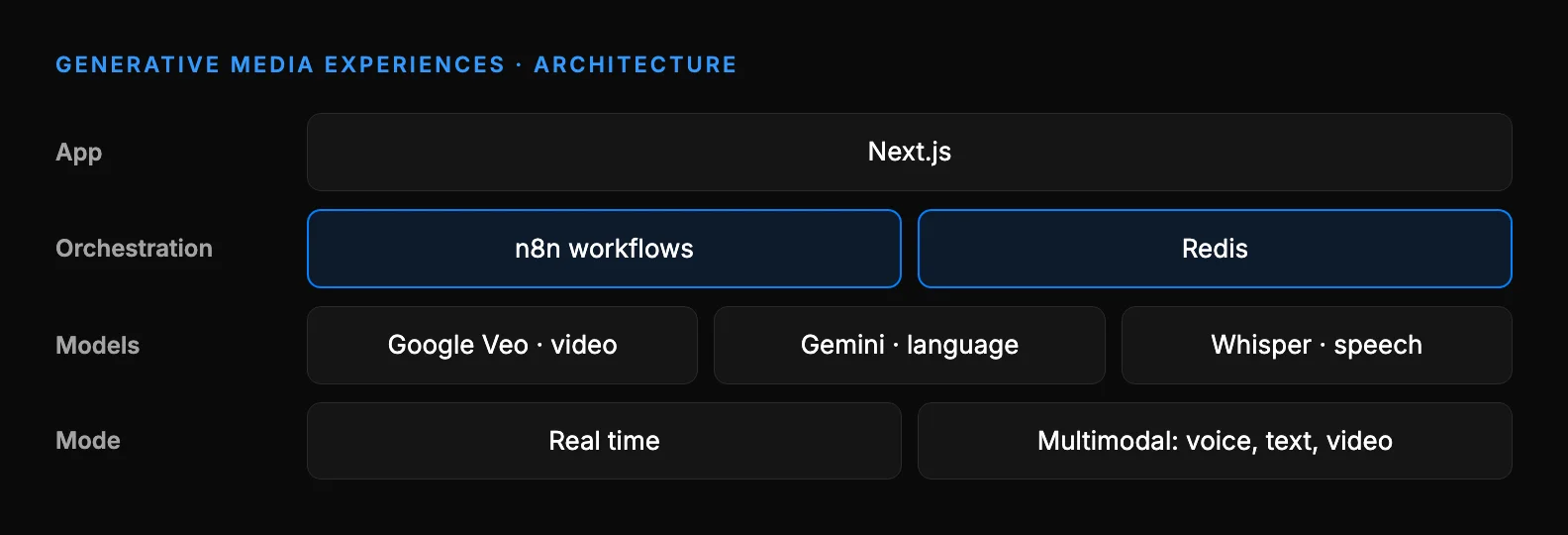
Using a workflow tool for orchestration was deliberate. When the brief is exploration, you want to swap a model or reorder a step in minutes, not redeploy a backend.
What does this mean for your brand?
If you own characters, stories or a recognizable voice, generative AI can turn your audience from viewers into participants. The models are ready. What decides whether it works is the experience design around them and how fast you can try ideas in front of real fans.
See how we design AI experiences on our AI UX design page, or build a product with us. To scope your own, start here.
Frequently Asked Questions
Can generative AI create video in real time?
Yes. In this project, Google Veo generated video scenes live as viewers chose where the story went next, orchestrated alongside Gemini for the storytelling.
How do you build a voice conversation with an animated character?
Chain speech recognition with a language model. Here, Whisper transcribed what fans said and Gemini wrote the character’s reply, fast enough to hold a live conversation.
Why use a workflow tool like n8n to orchestrate AI models?
Speed of change. When you’re exploring what works, a workflow tool lets the team swap models or reorder steps in minutes, without redeploying backend code.